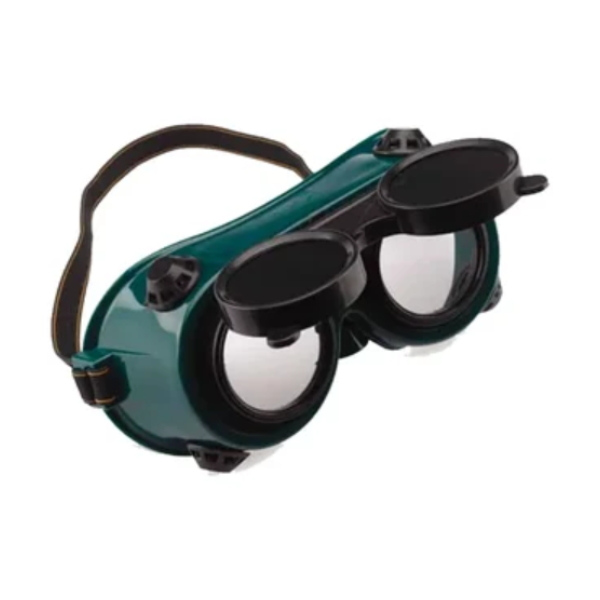
Welding and related fabrication activities expose workers to intense light, sparks, hot particles, and other hazards that require task-appropriate protection. Selecting Welding Goggles should therefore begin with the specific welding or allied process rather than treating all protective eyewear as interchangeable.
For fabrication workshops and engineering businesses in Talegaon, Maharashtra, suitable eye protection can support both worker safety and the visibility required for controlled, accurate work.
Match Welding Goggles With the Work Process
Different welding, cutting, brazing, and related operations can create different eye-protection requirements.
Before purchasing goggles, businesses should identify the process, exposure level, duration of work, and other protective equipment being used.
Procurement teams should discuss factors such as:
- Welding activity
- Required lens characteristics
- Side protection
- Fit
- Ventilation
- Compatibility with face protection
- Wearing duration
- Working environment
The required protective characteristics should follow the specific application and relevant safety requirements.
Do Not Choose Lenses by Appearance
A darker-looking lens should not automatically be assumed to provide suitable protection for every welding process.
Eye protection needs to match the work being carried out. The relevant lens and product specifications should be checked rather than relying on visual appearance alone.
This is particularly important when a workshop carries out several processes using different equipment.
Comfort Influences Consistent Use
Fabricators often need to wear eye and face protection for repeated tasks throughout the working day.
Poor-fitting goggles can create pressure points, interfere with other PPE, or become uncomfortable. Fogging and reduced visibility can also affect usability.
A product that combines appropriate protection with practical fit can make PPE compliance easier to maintain.
Check Interaction With Face Protection
Depending on the operation, welding goggles may be only one part of the required protective arrangement.
Workers can also require suitable face and head protection based on the task. Each component should work together without creating gaps or interfering with fit.
Safety managers should observe workers performing representative tasks when reviewing a new PPE combination.
Replace Damaged Eye Protection
Welding environments can be demanding on PPE.
Lenses and frames should be checked for:
- Cracks
- Heavy scratching
- Heat damage
- Loose components
- Reduced visibility
- Damaged straps
- Contamination
Employees should have access to replacement equipment when existing goggles become unsuitable.
Select a Supplier Based on More Than Availability
For businesses ready to purchase, supplier evaluation should include product understanding, availability, related PPE range, repeat supply capability, and responsiveness to industrial requirements.
A supplier that asks about the welding process can provide a more relevant purchasing discussion than one that treats all eye protection as the same product.
Shree Krishna Safety Products supports industrial buyers sourcing Welding Goggles and other personal protective equipment for fabrication and engineering applications. For Talegaon businesses, explaining the actual welding activity and current PPE setup can help make procurement discussions more focused.
Effective welding protection depends on matching PPE with the process, ensuring workers know how to use it, and maintaining equipment in serviceable condition. Procurement should support that entire cycle rather than ending when the goggles are delivered.
Keywords