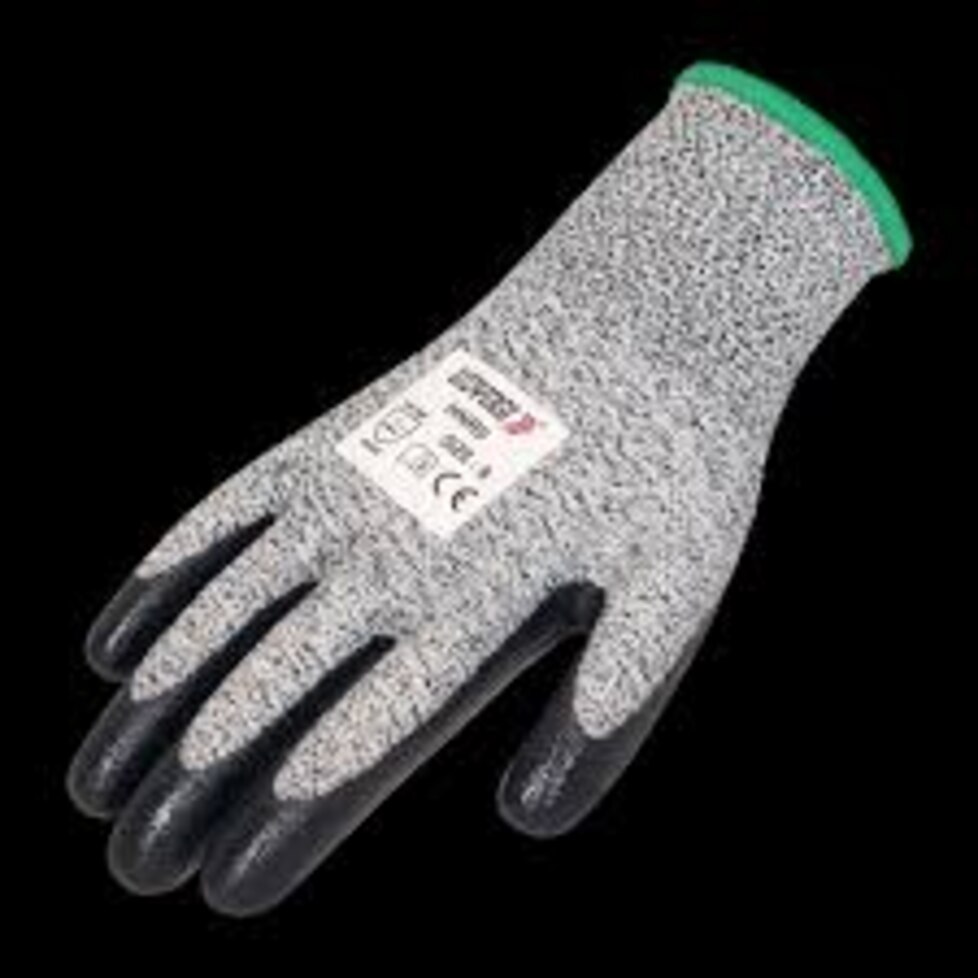
The right glove depends on the force, substance, temperature, voltage and contamination your hands encounter—not on a generic label such as “industrial glove.” By matching the glove construction to the task, reading its test markings and checking fit and condition before use, you can make a defensible selection for material handling, fabrication, machining, welding, chemical work, electrical work and warehouse operations.
Key takeaways
- Match glove material and construction to the task’s force and movement.
- Read every EN 388 performance marking, not just “cut resistant.”
- Confirm chemical breakthrough, heat ratings and electrical class from technical data.
- Inspect fit, grip, tears and contamination before each task.
Match the glove construction to the industrial task
Choose Udyogi safety hand gloves by construction, not by the generic word “industrial.” Match the glove to the force, material and movement involved, then verify the exact model’s markings and technical data sheet.
| Task | Suitable construction | Hazard addressed |
|---|---|---|
| Material handling | Nitrile-coated gloves or leather gloves | Abrasion, rough surfaces and moderate puncture |
| Fabrication | Cut-resistant fabrication gloves | Sharp sheet metal and edges; check ISO 13997 for high-force cuts |
| Machining | PU-coated gloves | Oil-resistant grip and dexterity; never use loose gloves near rotating parts |
| Welding | Heat-rated welding gloves, usually leather gloves | Sparks, radiant heat and hot parts |
| Chemical handling | PVC gloves or chemical-resistant nitrile gloves | Chemical contact; confirm the permeation data for the named chemical |
| Electrical work | Electrically insulating rubber gloves | Electric shock; use the voltage class specified for the task |
| Warehouse operations | Warehouse gloves, including latex-coated gloves | Repetitive handling, abrasion and grip on cartons |
Material handling gloves that feel flexible can fail against sharp edges, while thick fabrication gloves can make small components harder to control. A glove that causes fatigue or gets removed during the task has failed as a practical control.
Treat coatings as clues, not proof. PU-coated gloves prioritise feel, nitrile-coated gloves handle oily grip, latex-coated gloves provide elastic grip, and PVC gloves suit selected chemical or wet-handling duties. Confirm fit: oversized gloves catch on equipment, while undersized gloves split at seams.
Compare the protection you need against the protection you might assume
A glove that feels heavy is not automatically safer. Match its construction to the energy, substance or contaminant reaching your hand.
| Hazard | Protection you need | Protection you might assume |
|---|---|---|
| Mechanical | Abrasion protection, blade-cut protection, puncture protection and impact protection, selected separately for the task | A cut-resistant gloves label covers every mechanical risk |
| Heat or cold | Heat-resistant gloves for contact, radiant or convective heat; cold-resistant gloves for low temperatures and cryogenic handling | Any thick glove prevents burns or cold injury |
| Chemical | Chemical-resistant gloves verified for the exact chemical, concentration, contact time and breakthrough data | A coated glove blocks every liquid |
| Electrical | Voltage-rated insulating gloves with the required class, inspection and testing controls | Rubber or dry gloves make any electrical task safe |
| Contamination | Disposable gloves for clean handling, or reusable gloves with a defined cleaning and replacement process | A visibly clean glove provides contamination protection |
High cut resistance does not stop powered machinery entanglement. A blade can defeat the material, while a rotating spindle can catch the glove and pull your hand into the hazard; isolate moving equipment instead.
Thicker, lined or multi-layer gloves can improve resistance but reduce dexterity and grip. If workers remove them to handle small parts, the selected protection has failed in practice.
Check the exact model’s markings and technical sheet, then replace gloves with pinholes, torn seams, hardened coatings or trapped contamination; chemically contaminated gloves may require disposal rather than washing.
Read EN 388 markings instead of relying on a cut-resistant label
An EN 388:2016+A1:2018 marking shows how a glove performed against specified mechanical tests; it does not declare the glove cut-proof. Read the code on the exact model, then match it to the force, edge and movement in your task.
- Abrasion rating: levels 1 to 4, based on how many cycles the material withstands before wearing through.
- Circular-blade cut rating: levels 1 to 5, based on cycles needed for a rotating blade to cut the glove.
- Tear rating: levels 1 to 4, showing the force needed to continue a tear.
- Puncture rating: levels 1 to 4, showing the force needed for a probe to pierce the glove.
- ISO 13997 cut rating: levels A to F, showing resistance to a sharp blade under increasing force.
- Impact rating: P means the glove passed the impact test; no P means it did not receive that result.
The circular-blade cut test can understate cut resistance in fibres or metal-containing materials that blunt the blade. For high-force sharp-edge work, compare the ISO 13997 cut rating and the ANSI/ISEA cut rating separately; their scales are not interchangeable.
A high cut resistance result does not protect against powered blades, rotating machinery or uncontrolled knife contact. Snagging can pull a gloved hand into moving parts, so guarding and isolation remain essential. Confirm the exact EN 388 markings, technical data sheet and conformity documents before buying.
Verify chemical breakthrough, thermal performance and electrical class
A chemical, heat or electrical claim covers only that hazard; it does not transfer to the others. Check the exact model marking, technical data sheet and conformity documents before selecting gloves for the task.
For chemical handling, match the glove to the named chemical, concentration, temperature and contact pattern. EN 374 chemical gloves use EN ISO 374-1 permeation tests, but the classification is not universal chemical protection.
- Type A chemical glove: at least six listed chemicals with a chemical breakthrough time of 30 minutes or more.
- Type B chemical glove: at least three listed chemicals with a breakthrough time of 30 minutes or more.
- Type C chemical glove: at least one listed chemical with a breakthrough time of 10 minutes or more.
Breakthrough time is not a safe wearing time. Check chemical degradation data too: swelling, stiffening, cracking or softening can destroy protection before a leak is visible.
Thermal selection requires the individual EN 407 results, not a “heat-proof” label. Confirm whether the task involves contact, convective or radiant heat, flame, molten-metal splash or steam; a glove rated for one exposure may fail against another. For cold work, check the glove’s tested cold performance and whether its lining preserves grip and dexterity.
For electrical work, use electrical insulating gloves tested to ASTM D120 or EN 60903. Select the voltage class above the maximum working voltage, and do not substitute general-purpose gloves or chemical gloves for electrical insulating gloves.
Check fit, grip and glove condition before every task
A selected glove remains usable only when glove fit, grip and material condition still match the task. Check it with the worker’s actual tools and hand movements, not from a static fitting alone.
1. Confirm glove fit by checking finger length, palm width and cuff coverage. Fingers must reach the tips without bunching, the palm must not pull at the seams, and the cuff must overlap the sleeve when liquid or debris could enter.
Oversized gloves reduce control and can catch in rotating equipment; tight gloves restrict dexterity and split sooner.
2. Test dexterity by picking up the workpiece, operating controls and handling fasteners. If the worker removes the glove to feel or control the task, choose a different thickness or construction.
3. Match the surface condition to the claimed grip. Confirm dry grip on clean parts, wet grip with water or coolant, and oily grip with the actual oil. A coating that grips dry metal can slide on oil.
4. Complete a glove inspection before each task and after contamination or abrasion. Reject gloves with pinholes, thinning, hardened areas, damaged cuffs or coating loss. Check seams and elasticity too.
5. Isolate contaminated gloves. Chemical residues retained inside can injure skin, so follow the chemical’s safety data sheet for cleaning or disposal instead of washing by habit.
Sites that source safety footwear from Shree Krishna Safety Products can use the same task record to document glove size, condition and replacement decisions.
Frequently asked questions
How should you match glove construction to an industrial task?
Identify the task’s force, material and required hand movement, then choose construction and materials that address those hazards without restricting control.
Why is a cut-resistant label alone not enough?
A cut-resistant label does not show the glove’s complete EN 388 performance. Read the full marking for abrasion, cut, tear, puncture and impact results.
What protection details should you verify before using safety gloves?
Check the exact model’s technical data for chemical breakthrough time, thermal performance and electrical class before assigning it to the task.
What should you check before every task?
Check that the glove fits securely, provides the needed grip and has no tears, holes, hardening, contamination or other damage.