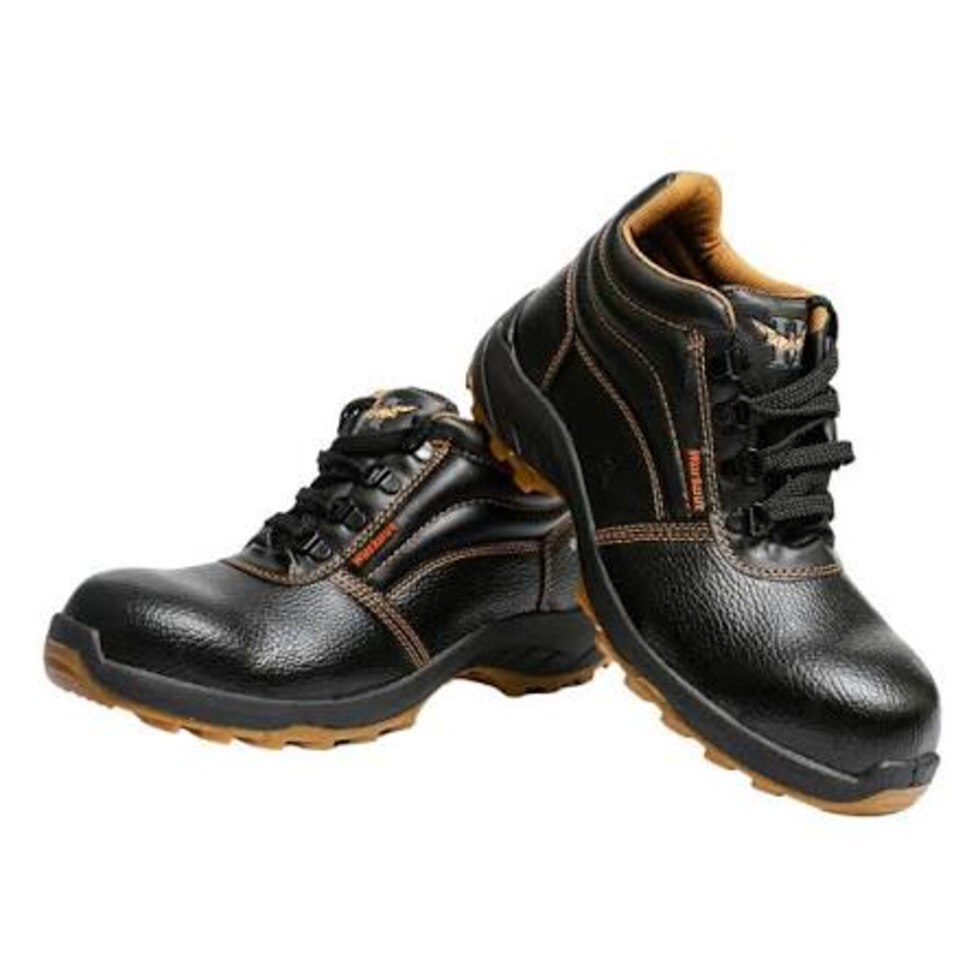
A safety shoe is suitable only when its tested protections match the hazards, floor conditions and working hours your team actually faces. By the end, you will know which markings, materials, fit checks, supplier documents and trial results to require before issuing footwear.
Key takeaways
- Start with documented hazards, including compression, punctures, slips, chemicals and electrical contact.
- Match toe caps, soles and construction to the job’s actual exposure conditions.
- Compare Hillson models by standards, fit, closure, sole grip and required wearing time.
- Replace footwear when soles, uppers, toe protection or waterproofing no longer perform.
How do you turn workplace hazards into footwear requirements?
Turn workplace foot protection into a specification by starting with a documented hazard assessment, not a toe-cap material or style name. Record exposure to falling or rolling objects, toe compression, punctures, slips, chemicals, heat, cold, water, electrical contact, static discharge and prolonged standing.
Match each hazard to a separately verified protection category:
- Falling objects and compression: protective-toe impact and compression ratings.
- Punctures: a tested puncture-resistant midsole or insert.
- Slips: the stated slip classification for your floors and contaminants.
- Chemicals, heat, cold and water: material- and exposure-specific resistance.
- Electrical contact and static discharge: the applicable electrical or antistatic classification, with separate controls for live work.
- Prolonged standing: fit, cushioning, stability and weight confirmed in a work trial.
A steel, composite or alloy toe alone is not a complete safety rating. Ask for the exact BIS safety shoe standard or Indian Standard safety footwear marking, or the applicable EN ISO or ASTM reference, on the tongue label, packaging and technical datasheet.
Under ASTM F2413, protective toes are tested for 75 ft·lbf impact and 2,500 lb compression; puncture, metatarsal and electrical protection need separate markings.
For EN ISO 20345:2021, check the complete designation and symbols, including current SR slip classification; do not treat older SRA or SRB marks as equivalent. Treat ASTM electrical-hazard footwear as secondary protection under controlled, dry conditions, never as a substitute for de-energising equipment.
Confirm the exact model, standard edition, certificate or declaration of conformity and size limitations. One certified model does not certify an entire product range.
Which toe cap, sole and construction match the job?
Choose construction by exposure, not by a style name such as Soccer, Sporty, Swag or Oxford. A steel toe vs composite toe decision depends on impact risk, temperature and metal-detector controls, while the sole must match the floor, contaminant and heat.
| Component | Option | Trade-off | Verify |
|---|---|---|---|
| Toe cap | Steel | Established impact protection; heavier and conducts heat and cold | Complete marking, internal length and shape |
| Toe cap | Composite | No metal-detector issue; lower thermal conduction | Impact/compression rating and toe clearance |
| Toe cap | Alloy | Thinner cap with lower weight | Documented clearance, testing and complete certification |
| Sole | Single-density PU sole | Light and flexible | Oil resistance, hydrolysis, abrasion and temperature range |
| Sole | Dual-density PU sole | Resilient midsole with tougher outsole | Bonding, tread wear and the same performance tests |
| Sole | Rubber or PVC | Rubber handles abrasion and higher heat; PVC suits some wet or chemical settings but can stiffen | Substance compatibility and temperature range |
Read the toe-cap marking on the tongue label, packaging and datasheet; do not infer protection from the outer shape. Ask for puncture-insert classification separately, because metallic and non-metallic inserts differ in coverage and penetration behaviour.
Check these limits before ordering:
- EN ISO 20345 HRO means outsole contact-heat resistance at 300°C for one minute, not continuous heat, molten metal or radiant-heat protection.
- FO means fuel-oil resistance, not resistance to solvents, acids, alkalis or process chemicals.
- For welding, molten metal, corrosive chemicals, extreme cold or sustained heat, require specialist footwear with exposure-specific evidence.
A treated upper does not prove the complete shoe is waterproof. For continuous water or submersion, verify whole-footwear water resistance, seams, tongue and closure design.
How should you compare Hillson models and confirm the fit?
Base a Hillson safety shoes comparison on the documented model or style reference, not on names or appearance. Check these differences:
| Item | Compare | Why it matters |
|---|---|---|
| Model protection | Toe protection, puncture insert and certification | One certified model does not certify the range |
| Construction | Sole compound, closure and weight | Affects grip, fatigue, durability and security |
| Fit options | Size range and approved fit adjustments | Confirms whether workers can achieve toe clearance and stable heel retention |
| Buying terms | Warranty and replacement policy | Defines support when defects or premature failure appear |
Ask Shree Krishna Safety Products for the exact technical datasheet, conformity or test documents, batch or model identification, care instructions, warranty terms, replacement policy and samples for a wear trial.
Measure both feet at the end of a shift. Wear the socks and orthotics used at work, then fit the larger foot. A practical safety shoe fit check must confirm:
- Space beyond the longest toe
- Forefoot width and instep pressure
- Heel lift and ankle contact
- Foot movement inside the shoe while climbing stairs, turning and squatting
Women and men need the same checks; women’s safety shoe sizing does not solve width or volume differences by itself. If one foot is larger, size for it and use only manufacturer-approved insoles or fit adjustments. Thick aftermarket insoles in safety shoes can reduce toe clearance and alter antistatic or electrical properties.
Trial representative workers with different foot shapes across full shifts on actual floors. Record discomfort, slips, loosened laces, hot spots and wear after a defined period before placing a bulk order.
Related products
 | Hillson Soccer Safety Shoes We are the manufacturer of Hillson Soccer Safety Shoes View product → |
 | Hillson Sporty Safety Shoes We are the manufacturer of Hillson Sporty Safety Shoes View product → |
When do slip testing and a gumboot decision change the choice?
Slip resistance is a floor-and-contaminant match, not a universal anti-slip promise. Test or verify slip-resistant safety shoes on the surfaces workers actually use. Wet floor footwear and oily floor safety shoes can produce different results even when both carry similar marketing claims.
| Surface or contaminant | Check | Why results differ |
|---|---|---|
| Wet ceramic tile | Traction with water present | Smooth glaze reduces grip |
| Glycerol-contaminated steel | Slip performance in glycerol | Simulates a low-friction film |
| Oily industrial floor | Oil-resistant compound and tread | Oil can defeat unsuitable rubber |
| Dusty concrete | Channel clearing and edge grip | Dust fills shallow tread |
| Metal grating | Tread contact and stability | Open gaps reduce contact area |
| Clean, dry surfaces | Walking and turning control | Dry grip does not predict wet grip |
- An EN ISO 20345:2021 SR classification does not replace evaluation of the contaminant, walking pattern and floor. Inspect tread depth, channels and compound, then repeat the check as the outsole wears.
- Use a safety shoe versus gumboot decision: choose a gumboot for standing water, mud, liquid splash, submerged areas or chemical contamination that can enter an ankle-height shoe. Verify whole-footwear water resistance, seams, tongue and closure; a treated upper alone is insufficient.
- Choose an ankle-height shoe when floors are mainly dry, liquid exposure is controlled, and ventilation, flexibility and lower fatigue matter. Gumboots can cause heat, sweating and fatigue during long indoor shifts.
- For chemicals, match boot material to the named chemical, concentration, temperature and contact time. Fuel-oil resistance alone is not chemical resistance; retain floor controls, spill response and housekeeping.
How do you keep footwear serviceable and know when to replace it?
A safety shoe inspection checklist starts before every shift, not after a slip or impact. Look for exposed or deformed toe-cap edges, sole separation, split or worn tread, punctures, crushed uppers, damaged eyelets, open seams, and chemical or oil contamination.
- Remove the pair when the outsole no longer grips, the puncture insert is damaged, or the toe cap is exposed or deformed.
- Remove it when the upper or seams no longer retain the required protection, or contamination has degraded the materials.
- Do not set a generic lifespan for safety shoes. Decide when to replace safety shoes from visible damage, material deterioration and the job’s exposure.
- Apply safety shoe break-in gradually. Wear new shoes for short work periods with dry socks, then increase the duration; do not start with a full shift.
- Wear moisture-wicking work socks, change damp socks during long shifts and dry footwear fully between shifts.
- For PU footwear care, wash with mild soap and water, then air-dry away from direct heat and prolonged sunlight.
- Never use solvents or store wet shoes in sealed containers. Heat, chemicals and moisture accelerate adhesive failure and PU hydrolysis.
- Use only manufacturer-approved replacement insoles and components.
Track rejected PPE, discomfort, slips, removal during shifts, repair time and replacement frequency. These records reveal whether a cheaper-looking pair is costing more through lost time and non-use.
Frequently asked questions
How do you turn workplace hazards into footwear requirements?
Record each exposure, including falling or rolling objects, toe compression, punctures, slips, chemicals, heat, cold, water, electrical contact, static discharge and prolonged standing. Use those findings to specify toe protection, sole properties, construction and any chemical, thermal or electrical requirements.
Which toe cap, sole and construction match the job?
Choose toe protection for the impact and compression risk, then assess the sole for puncture resistance, slip control, oil or chemical exposure, heat and terrain. Select construction and closure based on water exposure, flexibility, durability and the hours you will wear the shoes.
How should you compare Hillson models and confirm the fit?
Compare the model’s stated protection, certification information, materials, sole design, closure and intended use rather than relying on appearance. Check fit with work socks, confirm heel retention, leave toe room without forward sliding and walk on the type of surface found at work.
When do slip testing and a gumboot decision change the choice?
Ask for the slip-test marking and test conditions, because a tread label alone does not show performance on your floor. Choose gumboots when water, mud, washdown or liquid penetration requires a continuous waterproof shaft; choose safety shoes when ventilation, flex and easier movement matter more.
Related products
 | Hillson Swag Safety Shoes We are the manufacturer of Hillson Swag Safety Shoes View product → |
 | Ladies Safety Shoes We are the manufacturer of Ladies Safety Shoes View product → |
 | Cooper Safety Shoes We are the manufactuer of Cooper Safety Shoes View product → |
PU Sole Safety Shoes We are the manufacturer of PU Sole Safety Shoes View product → |