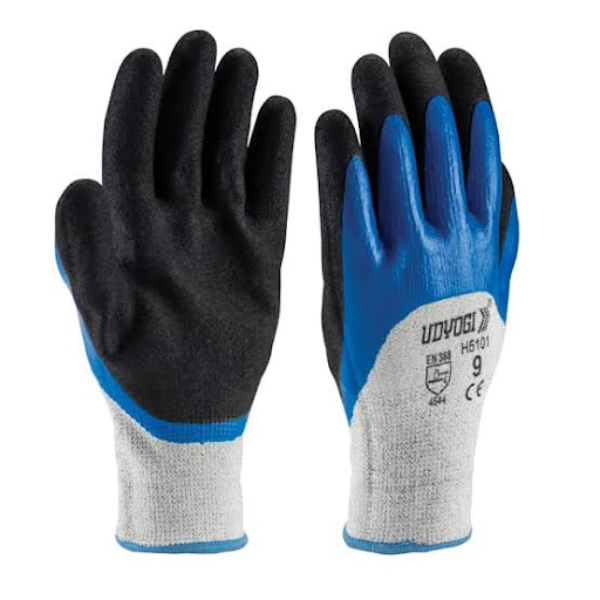
Hands are involved in almost every industrial activity, from material handling and assembly to maintenance and machine operation. That constant involvement also makes them vulnerable to workplace hazards. Udyogi Safety Hand Gloves can support hand protection when the glove type is properly matched with the material, process, and exposure involved.
For engineering and manufacturing operations in Talegaon, Maharashtra, choosing gloves based only on size or general appearance can leave important hazards unaddressed.
Different Jobs Need Different Udyogi Safety Hand Gloves
There is no universal industrial glove suitable for every task.
A worker handling rough components may need protection against abrasion, while someone dealing with oils or process chemicals may require a glove with different material properties. Fine assembly work may place greater importance on dexterity and grip.
Before selecting gloves, companies should identify the main exposure.
Typical considerations include:
- Abrasion
- Cuts
- Puncture risk
- Oils
- Chemicals
- Heat
- General dirt
- Grip requirements
- Dexterity requirements
This assessment helps procurement teams avoid issuing one glove type across unrelated operations.
Grip Can Influence Safe Material Handling
Poor grip can make handling components more difficult, particularly when surfaces are smooth, oily, wet, or irregular.
Workers may compensate by applying more force or changing their hand position, which can make tasks less comfortable and potentially less controlled. Appropriate glove selection can help workers maintain a practical grip while still receiving the required protection.
The glove should also allow enough dexterity for the job. Heavy protection that prevents workers from handling small components effectively may not be suitable for precision tasks.
Size and Comfort Affect Everyday Use
Even a technically suitable glove can create problems when the fit is wrong.
Gloves that are too large may reduce control. Gloves that are too tight can restrict movement and become uncomfortable during extended use.
Procurement teams purchasing for larger workforces should consider whether multiple sizes are needed instead of relying on a single standard size.
Damaged Gloves Need Timely Replacement
Industrial gloves are consumable PPE. Their protective properties can decline through repeated use, abrasion, contamination, chemical contact, heat exposure, and general wear.
Workers should be encouraged to identify:
- Tears
- Holes
- Worn gripping surfaces
- Damaged coatings
- Chemical degradation
- Excessive contamination
- Reduced flexibility
Replacement frequency should reflect actual working conditions rather than an arbitrary calendar interval.
Glove Selection Should Follow the Process
A useful approach is to observe the job directly. Safety managers can review what employees touch, how long the task lasts, whether materials are sharp or slippery, and whether gloves interact with machinery.
Special attention may be needed around moving equipment because inappropriate glove use can introduce additional hazards in certain machine operations. PPE selection should therefore be integrated with safe operating procedures.
Manufacturing facilities around Talegaon often manage multiple processes, meaning glove requirements can differ between production, stores, maintenance, fabrication, and utility teams.
Shree Krishna Safety Products supplies industrial PPE, including Udyogi Safety Hand Gloves, for companies evaluating task-specific workplace protection. Providing the right glove starts with understanding the work rather than simply choosing a general-purpose product.
When hazard assessment, correct sizing, worker instruction, and replacement practices are combined, hand protection becomes more practical and easier to manage across everyday industrial operations.
Keywords