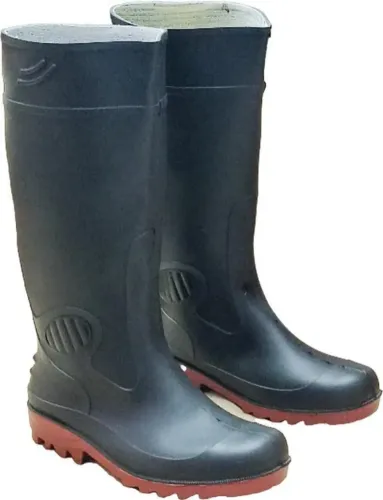
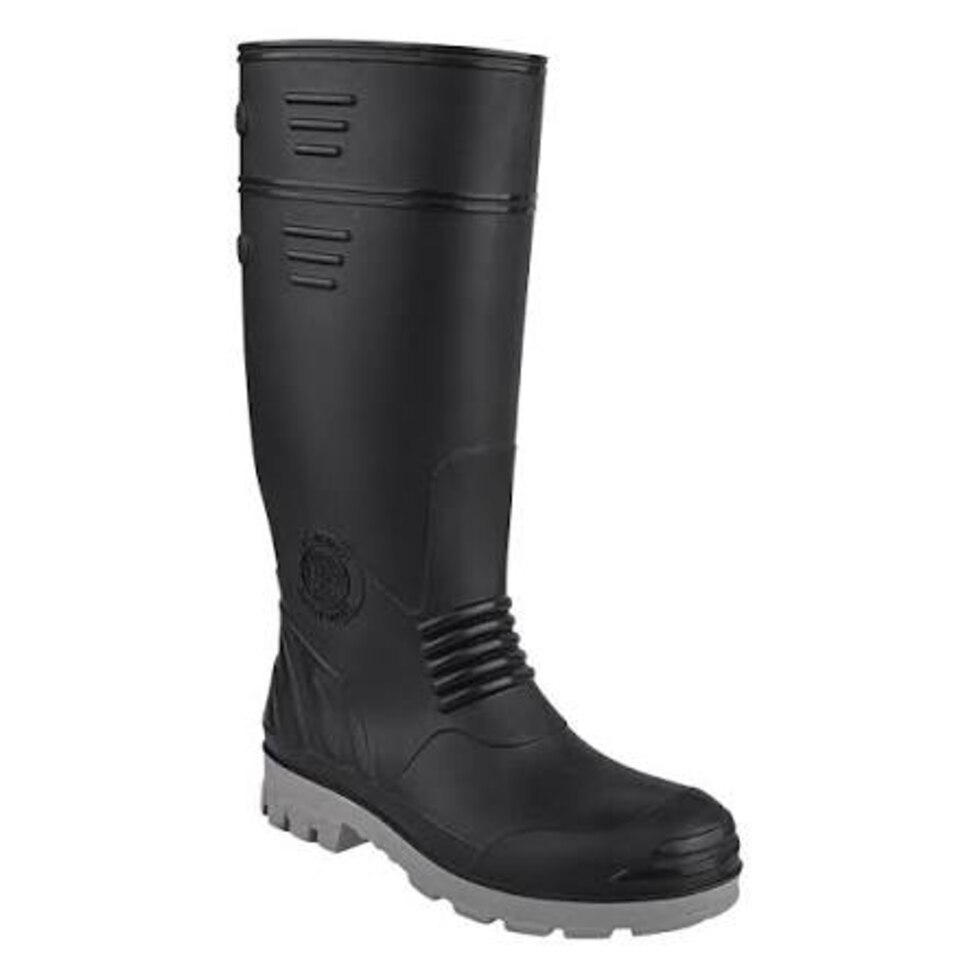
A boot described as waterproof or industrial does not automatically protect against oil, chemicals, punctures, electrical hazards or slippery floors. By checking the hazard, boot construction, material, tread, protective features and certification for the exact model, you can choose a Hillson gumboot that matches the work rather than the product label.
Key takeaways
- Select boot height above the highest liquid level you may encounter.
- Compare PVC and rubber construction against your temperature and durability needs.
- Choose outsole tread for your contaminant and floor surface.
- Approve pairs only after fit checks, site trials and inspection records.
Start with the hazard, water depth and required boot height
Choose boot height from the highest liquid level you can encounter, not the puddle visible at the entrance. An industrial hazard assessment should record standing-water depth, splash height, whether you kneel or step into drains, and hazards such as sharp scrap, chemicals or moving equipment. If water reaches the opening, the boot has already failed.
- Ankle gumboots suit shallow puddles, wet floors and splash exposure where water stays well below the ankle opening. They are easier to walk in, but offer little protection in deep mud, drains or flowing water.
- Mid-calf gumboots suit routine standing water, washdown areas and mud that can rise above the ankle without reaching the lower leg. Check the depth at ramps, floor depressions and vehicle tracks, where water collects deeper than the surrounding surface.
- Knee-high gumboots suit water, sludge or chemical spill risk approaching the knee, plus tasks involving kneeling or repeated splashing. They become unsafe if the liquid can flow over the opening; select waterproof trousers or different protective clothing instead.
Measure the worksite during its worst normal operation, including hose pressure, vehicle movement and drainage failure. Add allowance for waves and leg movement, but do not treat extra height as a substitute for chemical compatibility or puncture assessment.
A taller boot also adds weight, heat and restriction, so choose knee-high coverage only when the hazard requires it. Inspect the opening and upper for cuts before each shift; a small tear can admit water long before the sole shows damage.
Check waterproof construction and compare PVC with rubber
Confirm gumboot waterproofing at the construction points, not from the word “waterproof” on the packaging. Inspect the entry opening for a tight, undamaged collar, then flex the boot and examine the upper, sole, seams and moulded joints for pinholes, separation or cracks at flex points.
A damaged pull tab can distort the opening and admit water.
Material choice affects cold flexibility, abrasion, heat tolerance and chemical resistance. Request the exact material designation and manufacturer’s temperature limits before approval.
| Material | What to compare | Limits to verify |
|---|---|---|
| PVC gumboots | Consistent moulded construction, easy cleaning and resistance to selected industrial liquids | Cold-weather stiffness, cracking under flexing, abrasion at rough floors, and compatibility with the exact chemical |
| Rubber gumboots | Flexibility across a wider temperature range and compound-specific resistance to heat or abrasion | Swelling, hardening, cuts, hydrocarbon exposure and the stated maximum temperature |
Do not treat “oil resistant” as resistance to every chemical. Check the boot’s compatibility against the actual substance, concentration, temperature and contact time; hydrocarbon solvents, ketones, aromatic solvents, acids, caustics, disinfectants and hot process liquids can attack different polymers.
Reject a pair showing sole separation, rounded tread, punctures, hardened or swollen material, failed seams or cracking, even if it still keeps water out. Waterproofing cannot restore lost grip or structural protection.
Match the outsole to the contaminant and floor surface
Choose the gumboot tread pattern for the contaminant and floor combination, not for water alone. Mud, oil, detergent, biofilm and metal swarf create different slip hazards, so “slip-resistant gumboots” is useful only when the exact outsole has been assessed for your surface.
| Surface or contaminant | Outsole choice | What to watch for |
|---|---|---|
| Mud and loose ground | Deep, widely spaced lugs | Lugs bite and shed mud, but can lose contact on smooth wet floors |
| Standing water | Channels that clear water without becoming mud traps | Water depth and drainage matter; tread alone cannot compensate for submerged hazards |
| Oil, grease or fuel | An oil-resistant outsole with closely spaced edges | Confirm fuel-oil resistance; deep lugs do not automatically grip a thin oily film |
| Smooth wet concrete | Softer compound with broad, continuous contact and fine siping | A mud lug pattern can reduce contact and perform poorly; select wet concrete footwear for the actual contaminant |
| Uneven ground | Stable, deep lugs with a firm heel and defined edges | Check that the tread does not catch on steps, grating or loose debris |
Run a site trial on the real floor with its normal contaminant. Test starts, turns, stops and ladder use while the boots are new and after cleaning; a tread photograph cannot reveal how detergent or grease changes grip.
Reject pairs with rounded lugs, hardened or swollen material, cracks at flex points or sole separation. A boot can remain waterproof after its slip performance has deteriorated.
Verify toe, puncture, electrical and chemical protection claims
Approve the exact model only after matching its marking and test declaration to the hazard; “safety gumboot” does not confirm every protection claim.
| Feature | Marking or evidence to verify | What it proves |
|---|---|---|
| Toe protection | IS 15298 Part 4 or EN ISO 20345 marking; ASTM F2413 certification; steel toe cap or composite toe cap stated in the specification | Impact and compression performance, not puncture or chemical protection |
| Underfoot puncture | P or an equivalent declared penetration-resistance code; ask whether the puncture-resistant midsole is metal or non-metal | Resistance to penetration from below, not side-entry objects, upper cuts or protruding scrap |
| Electrical behaviour | A for antistatic footwear; EH or a separate dielectric-footwear declaration under the specified standard | Antistatic footwear dissipates charge; it is not electrical insulation or a substitute for lockout procedures |
| Water and chemicals | WR or the applicable water-resistance code; obtain a chemical-compatibility statement for the exact polymer and substance | Water protection or a tested chemical combination, not resistance to every liquid |
For Indian conformity, check the BIS Standard Mark, licence details and IS 15298 standard edition on the boot, packaging or certificate. For international supply, verify the complete EN ISO 20345 or ASTM documentation; ASTM F2413 toe certification alone does not establish waterproofness, slip resistance or chemical resistance.
Ask for results against the actual chemical, concentration, temperature and contact time. “Oil resistant” does not cover ketones, aromatic solvents, acids, caustics or hot process liquids.
Record the model or SKU, declared codes, batch or manufacturing date, certificate edition and trial evidence; an “equivalent” replacement is not equivalent if its toe cap, midsole or outsole changes.
Use fit, site trials and inspection records before approving a pair
Approve a Hillson gumboot only after gumboot fitting, a site footwear trial and documented inspection show that the pair works for the actual shift.
1. Fit the boot with the socks workers will wear. Check toe clearance, heel hold, calf opening, balance and freedom to climb, crouch and walk on wet ground. Reject pressure points, heel lift and a shaft that restricts circulation.
For shared pools, confirm every shift has usable sizes rather than issuing a technically suitable boot nobody can wear comfortably.
2. Run a site footwear trial across a full representative shift. Include standing water, mud, stairs, ladders, oily areas and the longest walking route. Record leaks, slipping, fatigue, trapped moisture and cleaning time. Do not approve a replacement as “equivalent” until its outsole, toe cap, midsole and material match the trialled model.
3. Establish a gumboot inspection at issue, return and scheduled review. Look for sole separation, flex-point cracks, rounded tread, punctures, hardened or swollen material, damaged pull tabs and failed moulded joints.
Clean wet boots, remove contaminated residue and dry them fully between users; replace boots for structural damage, degraded tread or material failure, not only leaks.
4. Ask Shree Krishna Safety Products for the exact Hillson SKU’s IS 15298 documentation, standard edition, declared protection codes, test or conformity evidence, size range, manufacturing date and batch. File the trial results and inspection criteria with the purchase record, then repeat approval when the supplier changes the model or standard edition.
Frequently asked questions
How do you choose gumboot height for wet industrial conditions?
Base height on the highest liquid level, splash height and tasks such as kneeling or stepping into drains. The opening must remain above the waterline.
What is the difference between PVC and rubber gumboots?
Compare PVC and rubber for waterproof construction, flexibility, durability, temperature exposure and the chemicals present at your site.
How should you choose a gumboot outsole?
Match the tread and compound to the contaminant and floor surface, such as water, oil, mud, smooth concrete or uneven ground.
What protection claims should you verify before buying?
Check documentation for toe protection, puncture resistance, electrical protection and chemical resistance. Confirm that each claim matches your site hazard.
How can you approve gumboots for workplace use?
Check fit with work socks, run a site trial, inspect comfort and stability, then record the model, size, trial result and inspection findings.