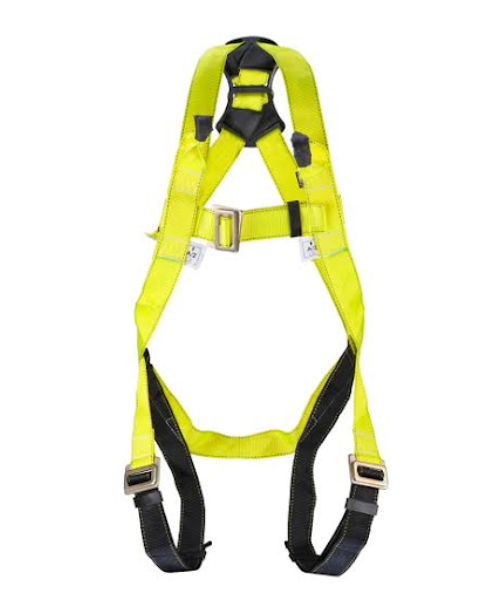
Work at height requires careful planning because a fall can result in serious injury even when the task itself appears routine. Maintenance work, construction activity, structural installation, warehouse operations, and industrial servicing can all involve elevated working positions. A properly selected Udyogi Safety Belt can form part of a broader fall-protection system when it is appropriate for the specific application.
For industrial operations in Chakan, Maharashtra, understanding how height-safety equipment should be selected and used is particularly important across manufacturing plants, construction sites, warehouses, and engineering facilities.
Where Udyogi Safety Belt May Be Required
Height-related PPE may be considered for activities involving elevated platforms, structures, access areas, and other locations where workers could be exposed to fall hazards.
Examples include:
- Structural maintenance
- Construction activities
- Industrial installation work
- Elevated equipment servicing
- Warehouse maintenance
- Utility-related tasks
- Plant shutdown activities
- Facility repair work
The presence of a height hazard does not automatically mean that every belt or harness configuration is suitable. The complete working situation must be assessed.
Fall Protection Is a Complete System
A frequent misconception is that issuing a safety belt alone completes height protection. Effective fall safety depends on several connected elements.
These can include the body-support equipment, connecting component, suitable anchorage, work positioning arrangement, fall-clearance considerations, and rescue planning.
If one part of the system is incompatible with another, overall protection may be compromised.
Fit and Adjustment Need Attention
Height-safety PPE should fit the worker correctly. Equipment that is excessively loose, incorrectly adjusted, damaged, or unsuitable for the user's body size may not function as intended.
Before beginning work, employees should know how to inspect and adjust their equipment. Supervisors should also ensure that workers understand the limitations of the PPE being used.
Inspection points may include:
- Webbing condition
- Stitching
- Buckles
- Connecting points
- Metal components
- Labels and identification
- Signs of chemical damage
- Cuts, burns, or abrasion
Equipment showing significant deterioration should be removed from service according to the applicable inspection procedure.
Anchorage Selection Cannot Be Ignored
Even suitable personal protective equipment depends on an appropriate anchorage arrangement. Connecting height-safety equipment to an unsuitable structure can create a false sense of security.
The anchorage needs to be selected according to the work environment and applicable safety requirements. Workers should never improvise anchorage points simply because they are convenient.
Training Completes the Protection Process
Providing PPE without practical instruction leaves an important gap.
Workers involved in height-related activities should understand correct fitting, connection methods, safe movement, equipment limitations, pre-use inspection, and emergency procedures.
Industrial sites in Chakan may have employees, contractors, technicians, and temporary workers operating in the same facility. Consistent training helps ensure that everyone follows the same height-safety expectations.
Companies evaluating an Udyogi Safety Belt should therefore consider the complete work-at-height arrangement rather than treating the product as an isolated purchase. Shree Krishna Safety Products works with industrial procurement teams seeking PPE for different workplace applications.
Effective fall protection starts with hazard assessment and continues through correct equipment selection, inspection, training, and disciplined use at the worksite.
Keywords