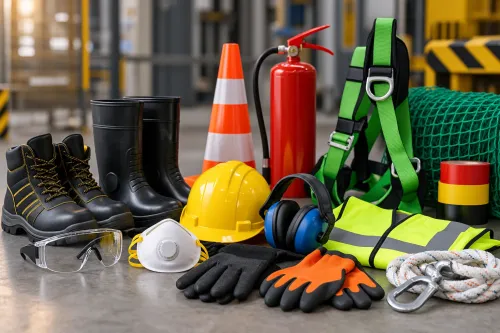
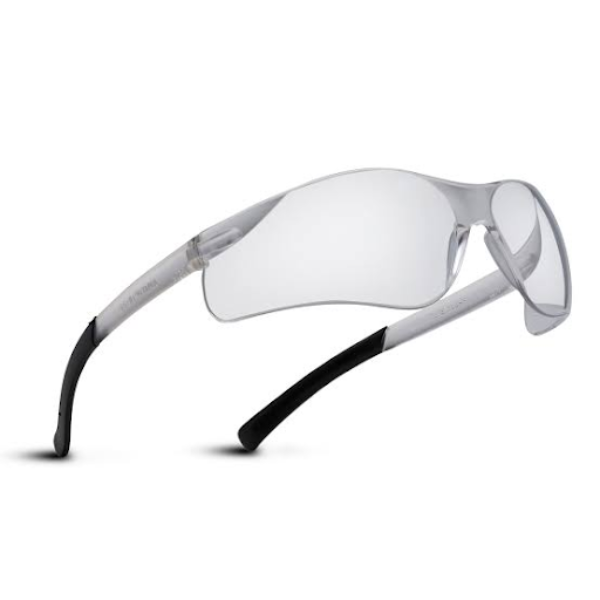
Industrial workplaces can expose employees to dust, flying particles, chemical splashes, metal fragments, and other hazards that may affect the eyes. In manufacturing environments, even routine activities such as grinding, drilling, cutting, material handling, and equipment cleaning can create eye-related risks. Udyogi Safety Goggles are designed to provide a protective barrier while allowing workers to maintain the visibility needed for everyday industrial tasks.
For manufacturing companies and engineering units in Pimpri Chinchwad, Maharashtra, selecting suitable eye protection begins with understanding the actual hazard rather than simply issuing the same eyewear across every department.
Understanding Where Udyogi Safety Goggles Are Used
Safety goggles are commonly required in workplaces where particles, liquids, dust, or debris may reach the eye area. Unlike ordinary spectacles, industrial goggles are designed specifically for occupational protection.
Typical applications can include:
- Grinding and machining areas
- Chemical handling sections
- Maintenance departments
- Fabrication workshops
- Construction activities
- Dust-generating operations
- Laboratory environments
- Equipment cleaning work
The required protection can vary significantly between these applications. A worker handling chemicals may need different coverage from an employee working near airborne dust.
Why Proper Coverage Matters
Eye protection needs to provide more than basic front-facing coverage. Hazards can approach from different directions, particularly during grinding, drilling, or material movement.
Suitable goggles may help create closer coverage around the eye area. The design, lens material, ventilation system, and compatibility with other PPE should therefore be reviewed before selection.
Visibility also matters. Workers are less likely to use protective eyewear consistently when lenses fog easily, cause discomfort, or interfere with their field of view.
Lens Condition Should Be Checked Regularly
Even good-quality protective eyewear can become less effective when it is poorly maintained.
Safety teams should inspect goggles for:
- Scratched lenses
- Cracks
- Loose straps
- Damaged frames
- Reduced visibility
- Contamination
- Poor fit
Scratched or heavily contaminated lenses can affect visibility and may encourage employees to remove their PPE during work. Establishing a replacement process is therefore an important part of an eye-protection programme.
Match the Goggles With the Task
One common workplace mistake is selecting protective eyewear based mainly on appearance. The better approach is to assess the hazard first.
Safety managers can consider the type of exposure, duration of work, surrounding environment, need for ventilation, compatibility with helmets or respirators, and frequency of use.
For example, eyewear used for occasional maintenance may have different practical requirements from goggles worn throughout a production shift.
Building Better Eye Protection Practices
PPE works most effectively when it forms part of a wider safety process. Employees should understand when eye protection is mandatory, how goggles should fit, how they should be cleaned, and when damaged equipment needs replacement.
Manufacturing facilities in Pimpri Chinchwad often involve multiple production processes within the same site. Conducting task-specific assessments helps companies avoid treating all eye hazards as identical.
Shree Krishna Safety Products supports industrial buyers looking for workplace PPE, including Udyogi Safety Goggles suited to different application requirements. Before procurement, businesses should identify the exact workplace hazard and expected usage conditions so that the selected eye protection matches the task.
A structured approach to eye protection can improve PPE consistency while helping workers perform their duties with appropriate visibility and coverage.
Keywords